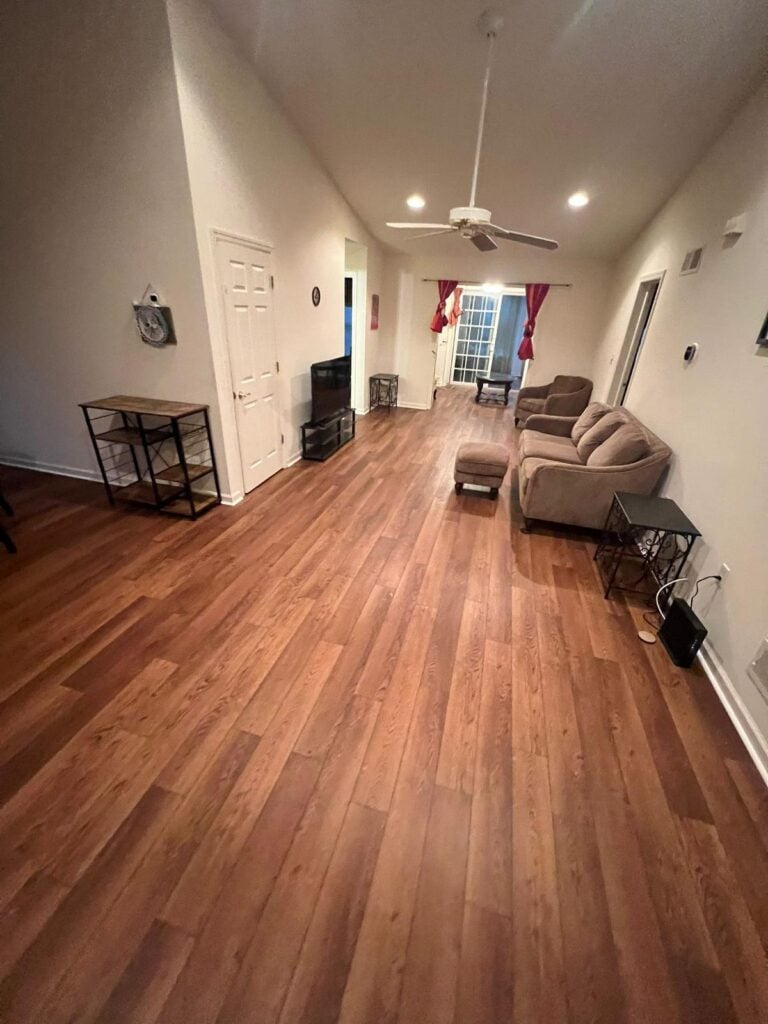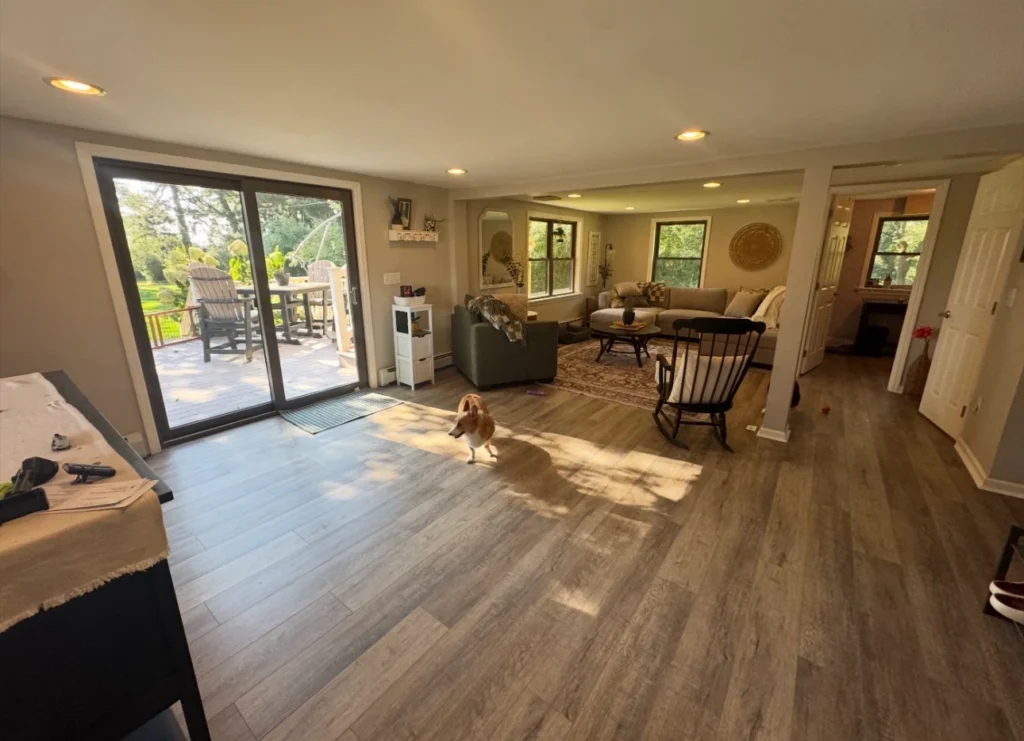
Pet-friendly flooring is one of the most searched topics we hear from homeowners in Lancaster and Dauphin County. Homes with dogs and cats go through flooring faster than almost any other household variable, and the wrong choice does not just look bad sooner. It fails structurally sooner too. At More Than Floorz, we install flooring across Harrisburg, Hershey, Middletown, Palmyra, Mount Joy, Elizabethtown, and throughout Lancaster and Dauphin County, and we have learned what actually holds up versus what sounds good on a spec sheet but falls apart in real life. This guide covers what performs best, what specs matter, what to avoid, and why subfloor prep matters just as much as product selection.
Most general flooring guidance is written for households without animals. When pets enter the picture, three factors change the calculation significantly.
Central Pennsylvania’s climate adds additional considerations. Dauphin and Lancaster County homes experience humid summers and dry winters. Flooring that expands and contracts significantly with seasonal humidity changes creates gaps where pet dander and moisture can collect. Dimensionally stable products reduce this problem.
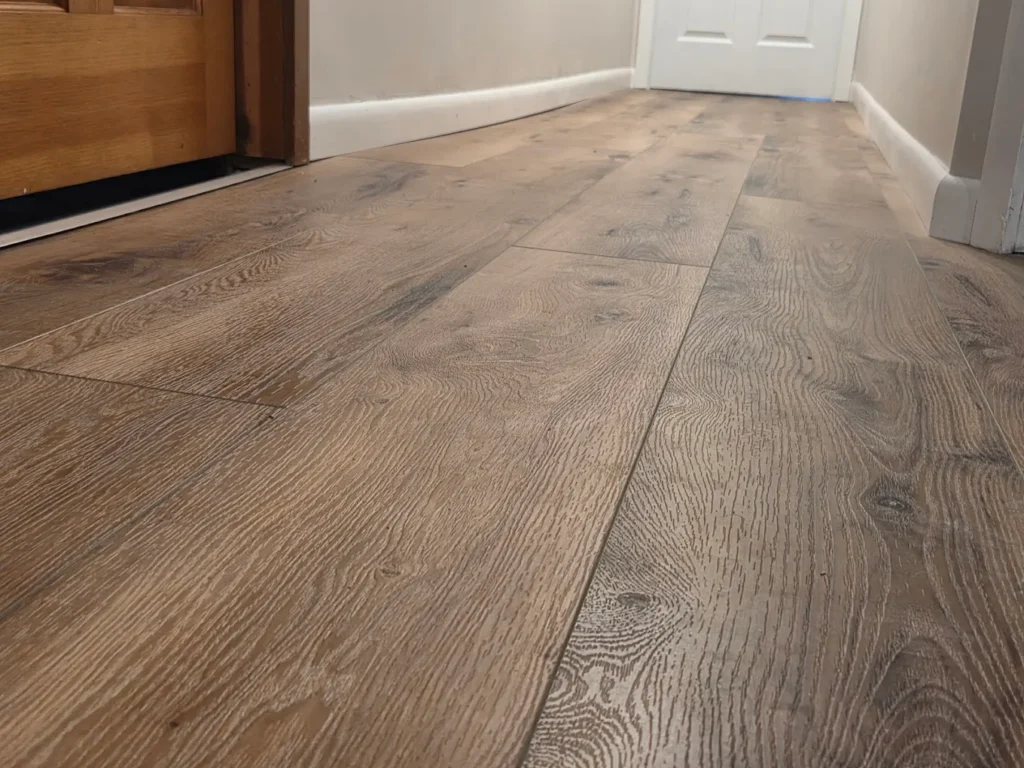
LVP is the flooring we install most often in pet households, and it earns that position based on actual performance rather than marketing claims. Here is why it works.
The key specs to look for when selecting LVP for a pet home are a wear layer of 20 mil or thicker and an SPC core rather than a softer WPC (wood plastic composite) core. Thinner wear layers, particularly anything under 12 mil, will show scratching faster than most pet owners expect.
Porcelain and ceramic tile is the most scratch-resistant and waterproof flooring available. For homeowners who want a hard surface that will not show nail marks and handles moisture completely, tile is the correct answer.
The practical limitations for pet households are comfort and traction. Large dogs spending significant time on tile floors can develop joint discomfort over time. Glazed tile can be slippery, particularly when wet, which creates a fall and joint-strain risk for older or larger breeds. Matte-finish porcelain improves traction meaningfully.
Tile is an excellent choice for entryways, laundry rooms, mudrooms, and bathrooms where pets come in from outside. For main living areas where animals rest and move around throughout the day, comfort and traction considerations matter more.
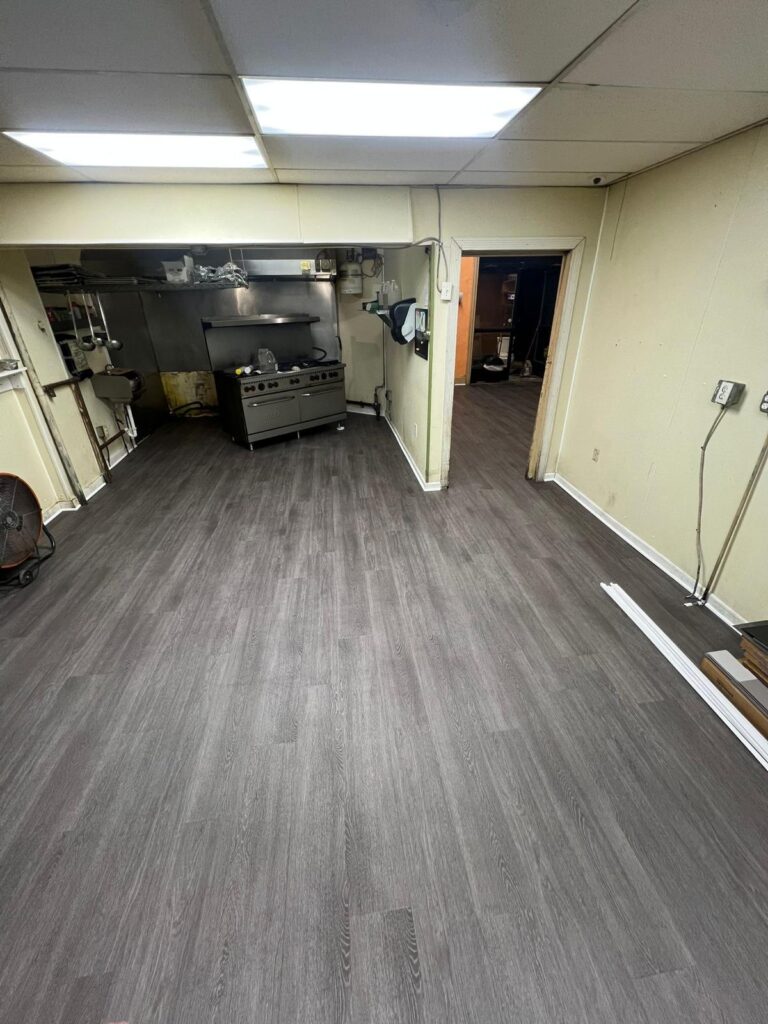
Hardwood is not the first recommendation for pet homes, but it is not off the table either. The key variables are species hardness, finish type, and how much scratch visibility the homeowner is willing to accept.
Harder species such as hickory, white oak, and Brazilian cherry show nail marks less than softer species like pine, cherry, or walnut. A matte or satin finish hides scratches better than a high-gloss finish, which reflects light in a way that makes every mark visible.
The real limitation of hardwood in pet homes is moisture. Hardwood is not waterproof. A pet accident that is not caught quickly will penetrate the finish, stain the wood, and potentially cause warping or cupping that requires board replacement. For a household with a puppy in training, an older dog with incontinence issues, or a cat that occasionally misses the litter box, hardwood carries real risk.
Engineered hardwood is more dimensionally stable than solid hardwood and handles humidity fluctuations better, but it is still not waterproof at the core. The surface veneer can be refinished once or twice, which extends the floor’s lifespan, but the moisture vulnerability remains.
Carpet is the flooring type we most often advise pet owners to reconsider, particularly in main living areas. The surface traps pet hair, dander, and odors in a way that other flooring does not. A urine accident that is not immediately discovered and properly treated can saturate the pad and reach the subfloor, at which point the odor cannot be eliminated without removing the flooring entirely.
For bedrooms where pets sleep but do not have accidents, carpet remains a reasonable choice. It provides warmth and sound absorption, and in a low-accident environment, the hygiene concerns are manageable. The combination of LVP or tile in main living areas with carpet in bedrooms is a practical approach that many Central PA homeowners use.
If carpet is the choice in a pet household, look for products with built-in moisture barriers and stain-resistant fiber treatments. These do not make carpet waterproof, but they extend the response time for accidents before damage becomes permanent.
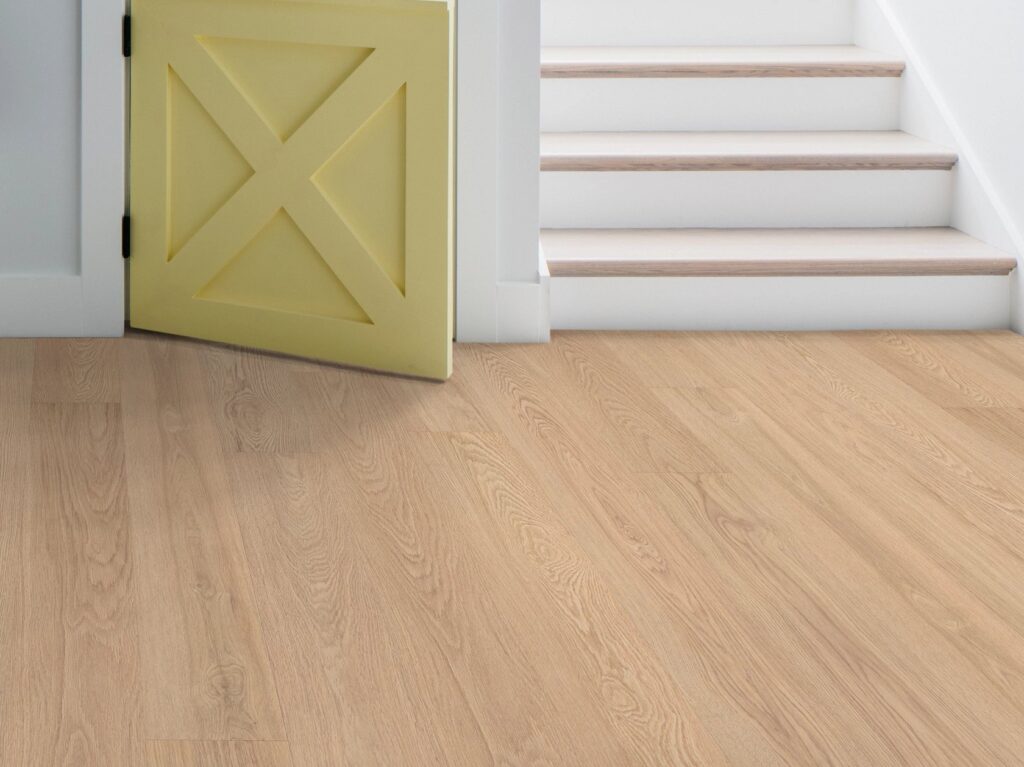
The same subfloor requirements that apply to any LVP or hard surface installation apply in pet homes, with added urgency around moisture. If the subfloor has existing pet urine contamination from a previous animal, that odor will not be sealed in by a new floor. It will continue to off-gas through seams and edges.
Before installing new flooring in a home with a history of pet accidents, the subfloor needs to be evaluated and treated. In cases of significant urine contamination, enzymatic treatments applied to the subfloor before installation are necessary. In severe cases, affected subfloor sections may need to be replaced.
Beyond odor and contamination, the standard subfloor prep checklist applies:
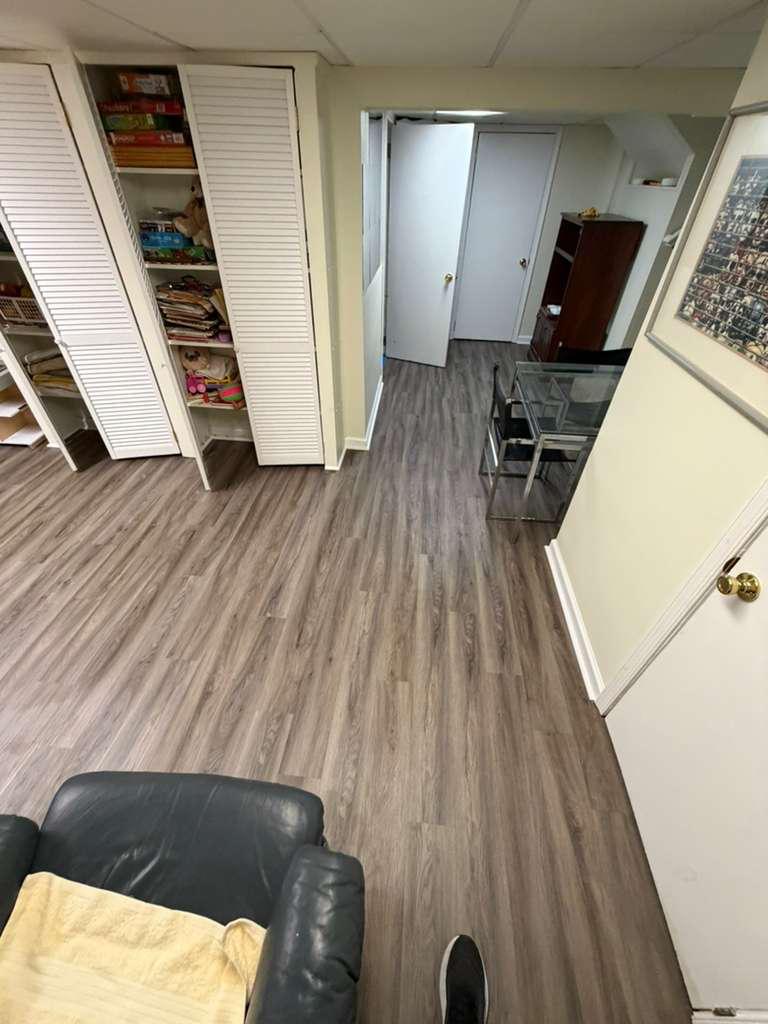
Cost ranges for LVP installation in pet households track closely with general LVP pricing, with one common addition: subfloor treatment for existing contamination, when needed.
Getting an accurate number requires seeing the specific space. Subfloor conditions across Central Pennsylvania’s housing stock vary enough that in-home estimates are always more reliable than online calculators.
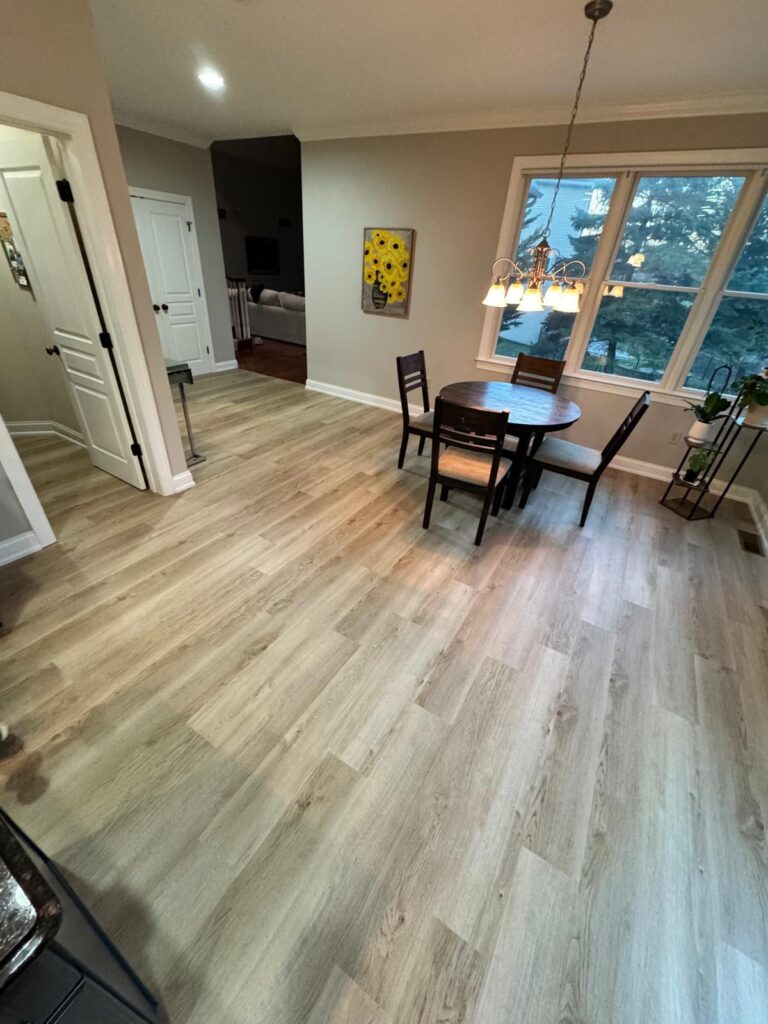
LVP’s click-lock system is genuinely more accessible than nailed hardwood, and some homeowners do install it successfully themselves. In pet homes, the case for professional installation comes down to two specific factors.
First, subfloor assessment and odor treatment require experience to do correctly. Missing existing contamination before installation means the problem comes back through the new floor. Identifying it and treating it properly before the first plank goes down prevents a costly redo.
Second, seam quality matters more in pet homes. A professionally installed floor with tight, properly seated seams gives liquid less opportunity to penetrate, even with a waterproof product. Seams that are slightly off or that leave minor gaps because of subfloor irregularities that were not corrected become entry points for moisture over time.
Most LVP manufacturers also require professional installation for the product warranty to remain valid. A DIY installation that develops moisture or seam failures may not be covered.
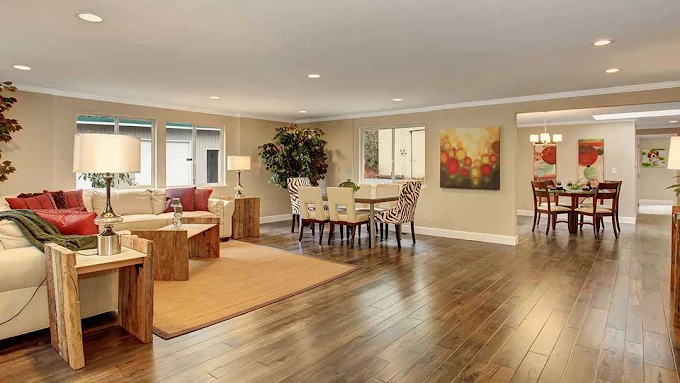
The right answer depends on the specific animals, the specific rooms, and the homeowner’s priorities. A few practical frameworks:
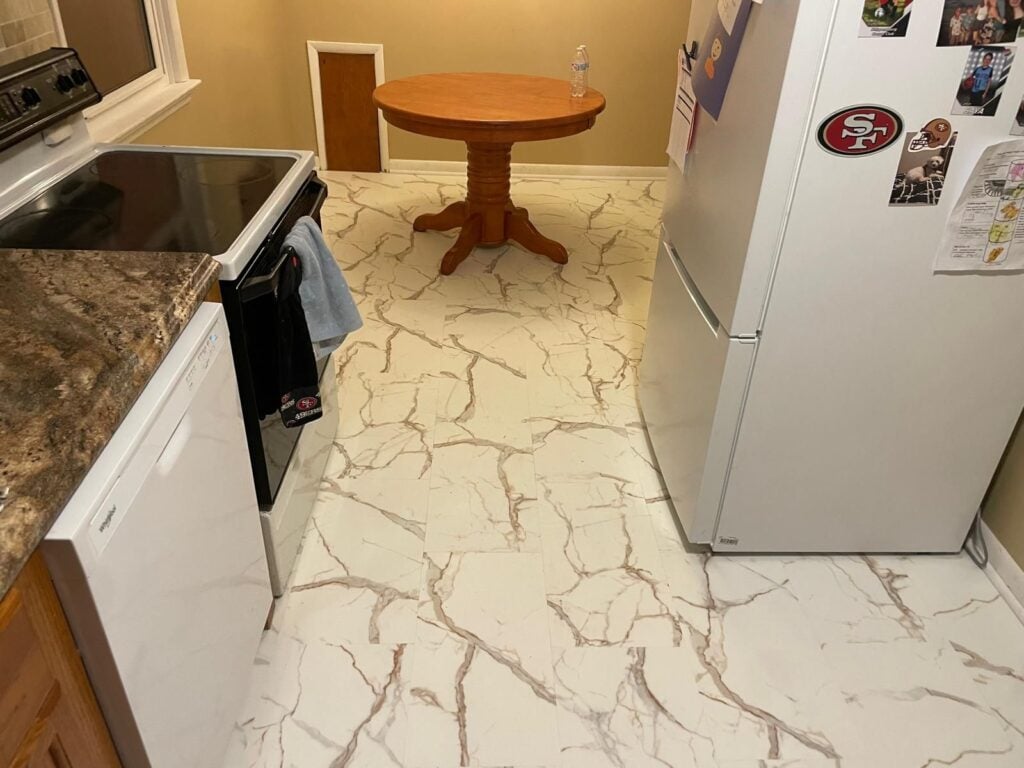
More Than Floorz installs luxury vinyl plank, hardwood, laminate, and carpet for homeowners in Harrisburg, Hershey, Middletown, Palmyra, Mount Joy, Elizabethtown, and throughout Lancaster and Dauphin County. Every estimate is free, in-home, and based on what we actually see in your space. If your home has existing pet damage or odor concerns, we assess the subfloor as part of the estimate at no additional charge.
Call us or request a free estimate online to get started.
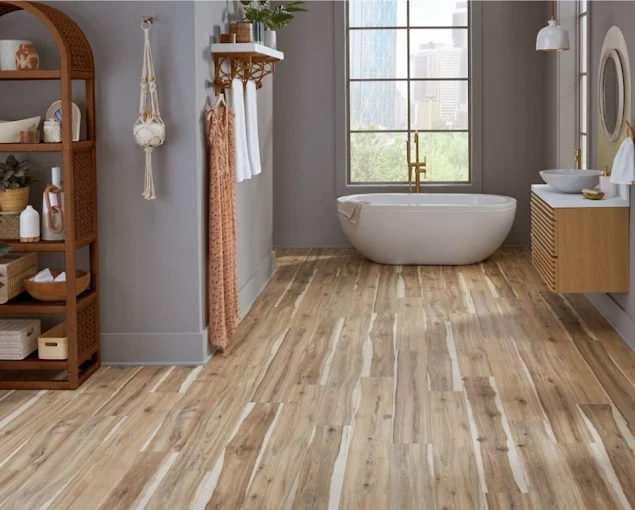
LVP with an SPC core and a wear layer of 20 mil or thicker is the most practical choice for most dog households. It is waterproof at the core level, resists nail scratching better than hardwood or laminate, and cleans easily. Porcelain tile is more scratch resistant and equally waterproof, but less comfortable for dogs that rest on hard surfaces throughout the day.
Quality LVP with an SPC or WPC core is waterproof through the plank itself. A pet accident that is cleaned up within a reasonable time will not damage the plank or penetrate to the subfloor. The critical installation factor is seam quality. Properly installed, tight seams prevent liquid from finding its way through the joints. Poorly installed seams with gaps reduce the waterproof benefit significantly.
Yes. Urine that has penetrated to the subfloor will continue to off-gas through seams and edges regardless of what flooring goes on top. If the home has a history of pet accidents, the subfloor needs to be inspected, treated with an enzymatic product, and in severe cases partially replaced before new flooring is installed.
Not categorically, but it carries real risk in active pet households. Hardwood is not waterproof, and a urine accident that is not caught quickly can cause staining and warping that requires board replacement. Harder species like hickory or white oak show nail marks less than softer species. A matte finish hides surface wear better than high gloss. For homes with puppies in training or dogs with any incontinence history, LVP is a more practical choice.
20 mil or thicker is the recommended minimum for households with dogs in kitchens, hallways, and other high-traffic areas. Thinner wear layers, particularly 6 or 8 mil products, are designed for light residential use and will show nail scratching more quickly.
Yes. More Than Floorz serves homeowners throughout Dauphin and Lancaster County, including Harrisburg, Hershey, Middletown, Palmyra, Mount Joy, and Elizabethtown. We are experienced with the subfloor assessment and pre-installation treatment that pet homes often require. Contact us to schedule your free in-home estimate.